
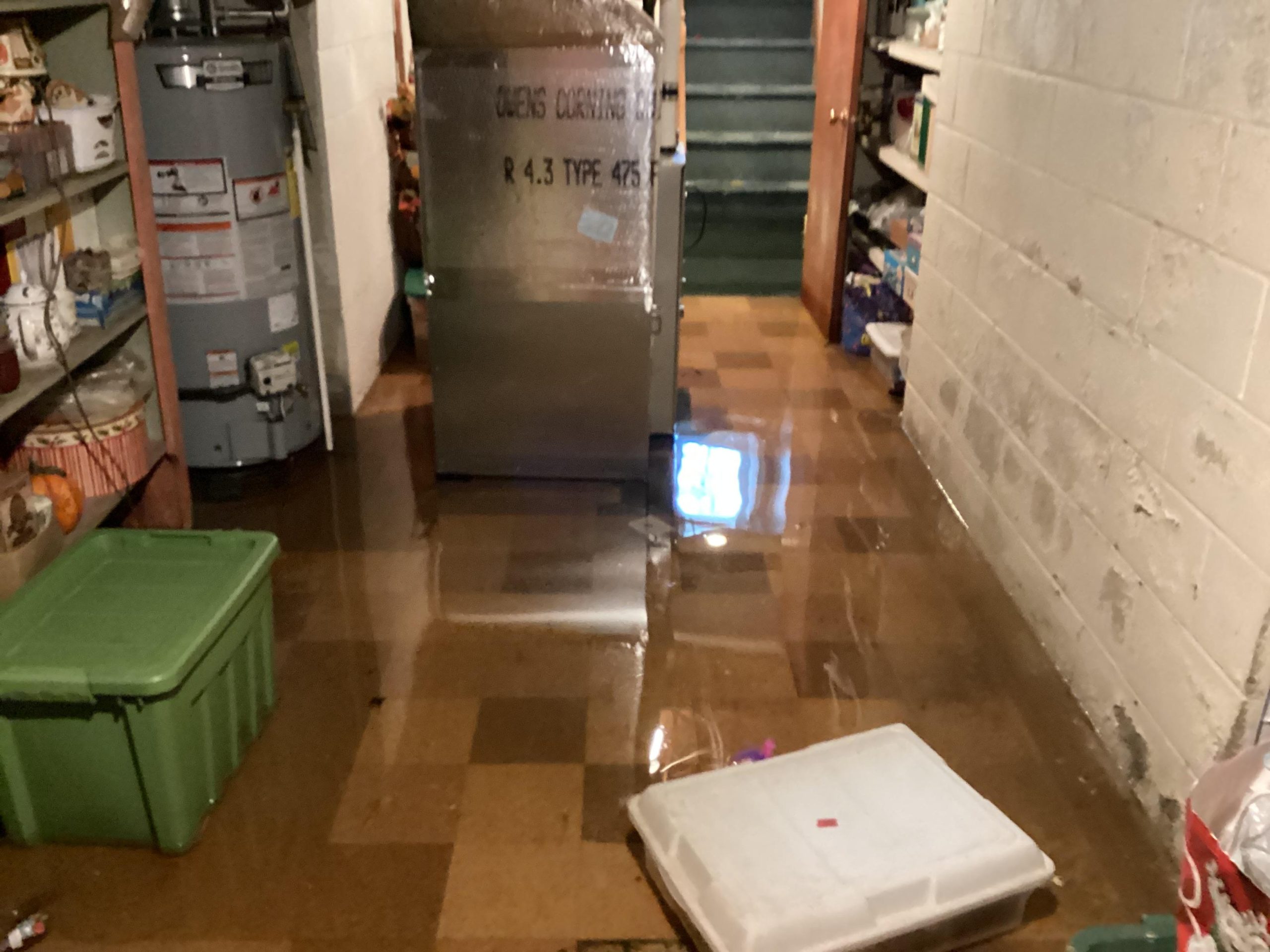
Written by Major Restoration | Published on July 2025
Moisture mapping is a systematic process where restoration professionals use specialized tools to detect and document hidden water damage behind walls, under floors, and inside ceilings. In York, PA, where older housing stock and humid summers create ideal conditions for water intrusion, this process can mean the difference between a minor repair and a major reconstruction project.
This article covers the tools used, what the process looks like step by step, how long it takes, and what York homeowners should expect when a restoration team arrives at their door.
Understand What Moisture Mapping Actually Is
Moisture mapping is not just pointing a meter at a wall. It is a documented survey of an entire affected area that produces a visual record of where water has traveled and how deep it has penetrated.
Professionals use readings taken at dozens or even hundreds of points across a room. Those readings get recorded on a floor plan or photo log, creating a moisture map that guides the entire drying and restoration plan.
This documentation matters for two reasons. First, it tells the crew exactly where to place drying equipment. Second, it gives your insurance company verifiable evidence of the damage extent.
Without moisture mapping, technicians are guessing. Guessing leads to leaving wet material behind, which leads to mold growth inside walls, sometimes within 24 to 48 hours of a water event.
Identify the Tools Professionals Use to Find Hidden Water
Restoration teams rely on several different instruments, and the right tool depends on the material being tested and how deep the water has traveled. Here is a breakdown of the most common tools used in moisture mapping.
| Tool | How It Works | Best Used On |
|---|---|---|
| Pin-type moisture meter | Measures electrical resistance between two pins pressed into material | Wood, drywall, baseboards |
| Pinless (non-invasive) moisture meter | Uses radio frequency signals to detect moisture below the surface | Hardwood floors, tile, concrete |
| Thermal imaging camera | Detects temperature differences caused by evaporating moisture | Walls, ceilings, large surface areas |
| Thermo-hygrometer | Measures air temperature and relative humidity in a room | Room conditions, drying progress |
| Borescope camera | A small camera inserted into a drilled hole to view inside cavities | Wall cavities, subfloor spaces |
Most experienced technicians carry all of these tools and use them in combination. A thermal camera may show a cold spot on a wall, and then a pin meter confirms that the material is actually wet and not just a pipe running behind the drywall.
Major Restoration uses thermal imaging as a standard part of every water damage assessment in York, PA, because it allows the team to cover large areas quickly without tearing into every wall.
Follow the Step-by-Step Moisture Mapping Process
Knowing the general sequence helps you understand what the crew is doing and why. A thorough moisture mapping inspection typically follows these steps.
- Initial walkthrough: The technician identifies the water source, the affected rooms, and any visible damage before taking a single reading.
- Thermal imaging scan: The camera scans walls and ceilings to flag areas with temperature anomalies that suggest moisture presence.
- Meter readings at flagged points: The technician takes pin or pinless meter readings at every flagged location and records the moisture percentage at each point.
- Grid readings on floors: For flooded rooms, readings are taken in a grid pattern across the entire floor, not just the visibly wet areas.
- Documentation on a floor plan: All readings are logged on a sketch or digital floor plan, creating the actual moisture map.
- Baseline comparison: Readings from unaffected areas of the same material type are taken as a reference to know what dry looks like in your specific home.
- Report generation: The final map and readings are compiled into a report shared with you and your insurance adjuster.
This entire process typically takes one to three hours for a single-family home, depending on the size of the affected area and how complex the water migration path is.
Recognize Why York, PA Homes Are Especially Vulnerable
York, PA sits in a region that sees significant seasonal precipitation, with average annual rainfall around 40 inches. Summer thunderstorms, spring snowmelt, and occasional heavy rain events from passing tropical systems can push water into homes through multiple pathways.
Many York neighborhoods feature older housing stock, including brick row homes and craftsman bungalows built in the early to mid 1900s. These homes often have original plaster walls, older plumbing, and basement walls made from stone or unreinforced block that absorb groundwater readily.
The combination of clay-heavy soils common in York County and the older building materials means water does not always announce itself. It seeps slowly, saturates insulation inside walls, and hides for weeks before any visible sign appears.
Additionally, York homeowners dealing with finished basements face extra risk. Carpeted floors and drywall finishing panels can conceal moisture for long enough that mold colonies are well established before anyone notices a musty smell.
Major Restoration responds to calls across the York area regularly and has seen firsthand how a two-day window after a storm event can mean the difference between drying and demolition.
Compare What Professional Moisture Mapping Costs Versus DIY Methods
Some homeowners try to assess water damage themselves using consumer-grade moisture meters available at hardware stores for twenty to sixty dollars. Understanding the difference between that approach and a professional assessment helps you make an informed decision.
| Factor | DIY Consumer Meter | Professional Moisture Mapping |
|---|---|---|
| Tool accuracy | Basic, surface-level readings only | Calibrated instruments with documented accuracy |
| Thermal imaging | Not included | Standard part of assessment |
| Documentation | None | Full report for insurance claims |
| Wall cavity assessment | Cannot detect inside walls | Borescope and non-invasive meters used |
| Drying plan | No guidance provided | Equipment placement plan included |
| Typical cost | $20 to $60 for meter | Often covered under insurance claim; standalone assessments vary by company |
The core risk with DIY moisture checking is a false negative. A consumer meter pressed against painted drywall may read normal even when the insulation and stud cavity behind it are saturated. You walk away thinking everything is fine, and three weeks later you have mold.
Professional assessments also produce written documentation, which most insurance policies require before approving a water damage claim. A handwritten note with your own meter readings does not satisfy that requirement.
Know What Happens After the Moisture Map Is Complete
The moisture map is the starting point, not the finish line. Once the technician knows exactly where the water is, the restoration plan gets built around that data.
- Drying equipment placement: Industrial air movers and dehumidifiers are positioned based on the map to pull moisture out of the specific materials and cavities that are wet.
- Daily monitoring: The technician returns each day to re-read moisture levels at the same documented points, confirming that drying is progressing on schedule.
- Material removal decisions: If readings do not drop within the expected window, drywall or flooring may need to be removed to allow direct airflow into the cavity.
- Mold risk assessment: Areas that were wet for more than 48 hours before discovery get flagged for potential mold testing before any reconstruction begins.
- Final clearance readings: The job is not complete until every mapped point returns to normal moisture levels, typically defined as materials within two to four percentage points of an unaffected baseline.
Skipping daily monitoring is one of the most common mistakes homeowners make when trying to manage a water loss themselves. The map only tells you where the water is on day one. You need ongoing readings to confirm the structure is actually drying.
FAQs on Moisture Mapping and Hidden Water Damage in PA
How long does hidden water damage take to cause mold in a PA home?
Mold can begin growing on wet organic materials like drywall and wood within 24 to 48 hours under warm, humid conditions. Pennsylvania summers create exactly those conditions. Finding and drying hidden moisture within the first two days is the critical window.
Can moisture mapping detect water damage under tile floors?
Yes. Pinless moisture meters and thermal imaging cameras can both detect elevated moisture levels beneath tile without removing it. If readings suggest a problem, a borescope can confirm by accessing the subfloor from a nearby access point or a small drilled hole.
Does homeowners insurance in Pennsylvania cover moisture mapping assessments?
Most standard homeowners insurance policies cover water damage from sudden events like burst pipes or appliance failures, and the cost of professional assessment is typically included in that claim. Gradual leaks or flood damage from outside usually require separate coverage. Always confirm with your adjuster.
How do I know if a contractor is doing real moisture mapping or just guessing?
Ask to see the moisture readings log and the floor plan documentation before work begins. A legitimate moisture mapping process produces written records with specific numbers at specific locations. If a contractor cannot show you that documentation, they are not doing a true moisture mapping assessment.
What moisture percentage is considered dry for drywall and wood framing?
Drywall is generally considered dry at moisture content below 1 percent using a calibrated pin meter. Wood framing is considered dry at 15 percent moisture content or below in most restoration standards. Your technician should establish a baseline reading from an unaffected area of your home as the specific target.
How much does water damage restoration typically cost in York, PA?
Costs vary widely based on the size of the affected area and materials involved. A single-room water damage job in York, PA commonly ranges from $1,500 to $5,000, while larger losses involving multiple rooms or finished basements can run $10,000 or more. Insurance coverage significantly affects out-of-pocket costs.
Wrap Up and Next Steps
Moisture mapping is the foundation of any effective water damage restoration project. Without knowing exactly where the water is hiding, no drying plan can be truly reliable, and the risk of mold, structural damage, and failed insurance claims goes up significantly.
If you suspect hidden water damage in your York, PA home after a storm, a plumbing failure, or any unexplained musty smell, do not wait and see. The longer wet materials sit, the more expensive the repair becomes.
Contact Major Restoration today to schedule a professional moisture assessment. Our team serves York and the surrounding York County area and can typically respond the same day for active water damage situations. Call us or fill out our contact form to get started.